2024 Institute Faculty
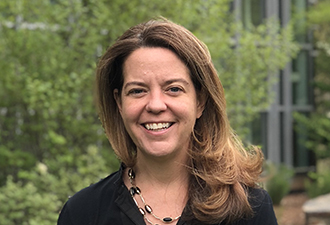
Rachel Brewster
University of Virginia (JD); UNC-Chapel Hill (PhD)
Professor Brewster is the Jeffrey and Bettysue Hughes Professor of Law at Duke University School of Law. She serves as co-director of Duke Law’s Center for International and Comparative Law and co-chair of Duke Law's JD-LLM Program. Her scholarly research and teaching focus on the areas of international economic law and international relations theory. Her recent publications include: "Enforcing the FCPA: International Resonance and Domestic Strategy” 103 Virginia Law Review 101 (2017); “The Market for Global Anti-Corruption Enforcement” 80 Law and Contemporary Problems 193 (2017) (with Samuel Buell); and “Pricing Compliance: When Formal Remedies Displace Reputational Sanctions,” 54 Harvard International Law Journal 259 (2013). In 2017-2018, she received Mellon Foundation support for the Sawyer Seminar (with Professor Philip Stern, Duke History) which examined the status of corporations in international law. Brewster has also taught at Harvard University where she was an assistant professor of law and affiliate faculty member of The Weatherhead Center for International Affairs, and served as legal counsel in the Office of the United States Trade Representative. She has also taught at the University of Hamburg’s Institute of Law and Economics and the University of St. Gallen, and was a Bigelow Fellow at the University of Chicago Law School.

James E. Coleman, Jr.
Columbia University (JD); Harvard University (AB)
Jim Coleman is the John S. Bradway Professor of the Practice of Law, Director of the Center for Criminal Justice and Professional Responsibility, and Co-Director of the Wrongful Convictions Clinic at Duke Law School. His experience includes private practice in Washington, DC, where he was a partner at Wilmer, Cutler & Pickering. In private practice, Jim specialized in federal court and administrative litigation; he also represented criminal defendants in capital collateral proceedings and was an active participant in his firm’s pro bono program. Jim also has had a range of government experience, including stints as an assistant general counsel for the Legal Services Corporation, chief counsel for the U.S. House of Representatives' Committee on Standards of Official Conduct, and deputy general counsel for the U.S. Department of Education. His academic work, conducted through the Center for Criminal Justice and Professional Responsibility, centers on the legal, political, and scientific causes of wrongful convictions and how they can be prevented.

Aya Fujimura-Fanselow
Fordham Law School (JD); Bryn Mawr College (BA)
Aya Fujimura-Fanselow is Clinical Professor of Law at Duke Law School and Supervising Attorney of the Duke Law International Human Rights Clinic. Aya has developed extensive expertise in human rights advocacy, clinical teaching, fact-finding, research, litigation, capacity-building, and coalition-building within the United States and abroad. Her work has primarily focused on gender and human rights, as well as economic, social, and cultural rights; transitional justice; reproductive rights; and criminal justice with a focus on pre-trial detention. Most recently, at ESCR-Net (International Network for Economic, Social and Cultural Rights) she strategically developed and coordinated collective advocacy projects to advance women’s economic, social, and cultural rights. Previously, at the International Center for Transitional Justice, based in New York and Kathmandu, Nepal, Aya spearheaded efforts to integrate gender into all aspects of transitional justice mechanisms in Nepal. As Legal Adviser for International Litigation and Advocacy at the Center for Reproductive Rights in New York, she developed cases to protect and promote women’s reproductive rights before regional and international fora. Her previous teaching experience consists of her work as Crowley Fellow and Adjunct Professor of Law at the Leitner Center for International Law and Justice at Fordham Law School.

Letizia Lo Giacco
Lund University (LLD); Geneva Academy of International Humanitarian Law and Human Rights (Graduate Institute for International Development Studies/University of Geneva) (LLM)
Letizia Lo Giacco is an Assistant Professor in International Law at the Grotius Centre for International Legal Studies of Leiden University. Her research explores structural questions of international law, with a focus on courts and judicial practices in global governance, as well as questions of authority at the intersection between the public/private divide. Letizia is the co-founder of the Leiden Hub on the Theory and History of International Law, an interdisciplinary platform for theoretical and/or historical questions on international law, and is a founding member of the European Society of International Law interest group on international criminal justice. She held positions as visiting research fellow at the Max Planck Institute for Comparative Public Law and International Law in Heidelberg, at the Amsterdam Centre of International Law, and at the Manchester International Law Centre, to which she was also an invited guest lecturer in international law. Letizia’s research combines theory and practice of international law and looks at transnational phenomena through the lens of public international law. She has published on questions of authority and formation of international law, looking at the practice of international and domestic courts in adjudicating international law, and on the use of judicial decisions as epistemic tools in international law argumentation. Letizia is the author of Judicial Decisions in International Law Argumentation (Hart Publishing, 2022).

Anna-Alexandra Marhold
University of Amsterdam (LLB, LLM (Law) and BA, MA (Russian)); European University Institute (PhD)
Anna Marhold is Assistant Professor at the Institute of Public Law and the Grotius Centre for International Legal Studies at Leiden University. Her specialization is international economic law, with a particular focus on international trade law at the intersection of energy and environmental regulation. Anna has published widely in the field of international economic, trade and energy law and EU external trade relations. Her forthcoming monograph titled Energy in International Trade Law: Concepts, Regulation and Changing Markets (Cambridge University Press) examines energy regulation in international trade law against the backdrop of energy markets that have radically changed over the past decades.

Pinar Ölçer
Leiden University (LLB, LLM, PhD)
Pınar Ölçer is an Associate Professor of Criminal and Criminal Procedural Law at Leiden Law School. Having graduated from Law School in Leiden, she obtained her PhD there in 2006 with her dissertation relating to special investigative measures in relation to criminal procedural fairness. Both in her teaching and research duties, her main focus is on the interaction between substantive and procedural criminal law and other domains of law, notably human rights law, using comparative law approaches in that regard. Pınar Ölçer has authored numerous publications in various languages, with some of her recent English works delving into topics such as aggravated migrant smuggling in a transit migration context and margins of appreciation comparing modulating deference versus engagement in ECHR standards for public procurement and (regulatory) criminal justice.

Misha Plagis
Maastricht University (LLM); Freie Universität Berlin (PhD)
Misha Plagis is an Assistant Professor of Public International Law at the Grotius Centre for International Legal Studies at Leiden University. Her research focusses on human rights law, with a specific focus on human rights law in Africa, regional and continental courts and tribunals, and African perspectives on international law. She has been a post-doctoral researcher at the Asser Institute, University of Amsterdam, a visiting scholar at the Danish National Research Foundation’s Centre for Excellence for International Courts (iCourts) at the University of Copenhagen (2019), the Centre for Law and Society at the University of Cape Town (2019), and the Max Planck Institute Luxembourg for International, European and Regulatory Procedural Law (2018). Misha is the Associate Editor of The ACtHPR Monitor blog, which provides news, comment, and debate on the African Court on Human and Peoples’ Rights. Prior to academia, Misha worked with a number of NGOs in India, South Africa, and the UK.

Mara Revkin
Yale Law School (JD); Yale University (PhD); Swarthmore College (BA)
Mara Redlich Revkin is an Associate Professor of Law at Duke Law School. Her primary research and teaching interests are in armed conflict, peace-building, transitional justice, migration, policing, and property with a regional focus on the Middle East and particularly Iraq and Syria. She has taught at Georgetown University Law Center, where she was a fellow at the Center on National Security and the Law. Mara has worked with and advised United Nations agencies and other humanitarian organizations on the design of evidence-based programs and policies that aim to strengthen rule of law and the protection of human rights, support peaceful reconciliation after conflict, and mitigate the root causes of political violence and extremism. Her work has been published or is forthcoming in The Journal of Politics, The American Journal of Political Science, The American Journal of Comparative Law, The Journal of Conflict Resolution, The Journal of Global Security Studies, World Development, The Yale Journal of International Law, The Harvard National Security Journal, The Annual Review of Law and Social Science, Foreign Affairs, and The Oxford Handbook of Islamic Law.

Richard Schmalbeck
University of Chicago (JD, AB)
Professor Schmalbeck is the Simpson Thacher & Bartlett Professor of Law at Duke University. He has also served as dean of the University of Illinois College of Law, and as a visiting professor on the University of Michigan and Northwestern University law faculties. His recent scholarly work has focused on issues involving non-profit organizations, and the federal estate and gift taxes. He has also served as an adviser to the Russian Federation in connection with its tax reform efforts. The fifth edition of his federal income tax casebook, co-authored with Lawrence Zelenak, was released by Aspen Publishers in 2018. Prior to beginning his teaching career, he practiced tax law in Washington, DC.

Henk Vording
Leiden University (MA in History, PhD in Law)
Henk Vording has been Professor of Tax Law at Leiden University Law School since 2006 and he is former Vice-Dean of Leiden University Law School. He is visiting professor at Hastings College of Law, San Francisco and Peking University Law School. Henk is a member of the Academic Committee of the European Association of Tax Law Professors, the Board of the Dutch Association for the Study of Taxation, and a former member of Dutch tax reform committee. He worked as an assistant professor in Economics at Leiden University Law School in 1986 and became an Associate Professor in Tax Law and Economics at Leiden University Law School in 2004. He has taught Introduction to Tax Law, Philosophical Theories of Taxation, and European Tax Policy. His research themes include European and international tax law and policy with a focus on corporation income tax, historical development of tax law and systems, and philosophical foundations of taxation and redistribution.