Legal Brief
Duke Law's faculty believe in making the law and legal concepts understandable and digestible. On this page, you'll find a series of videos called Legal Brief which explain key legal concepts in three minutes or less.
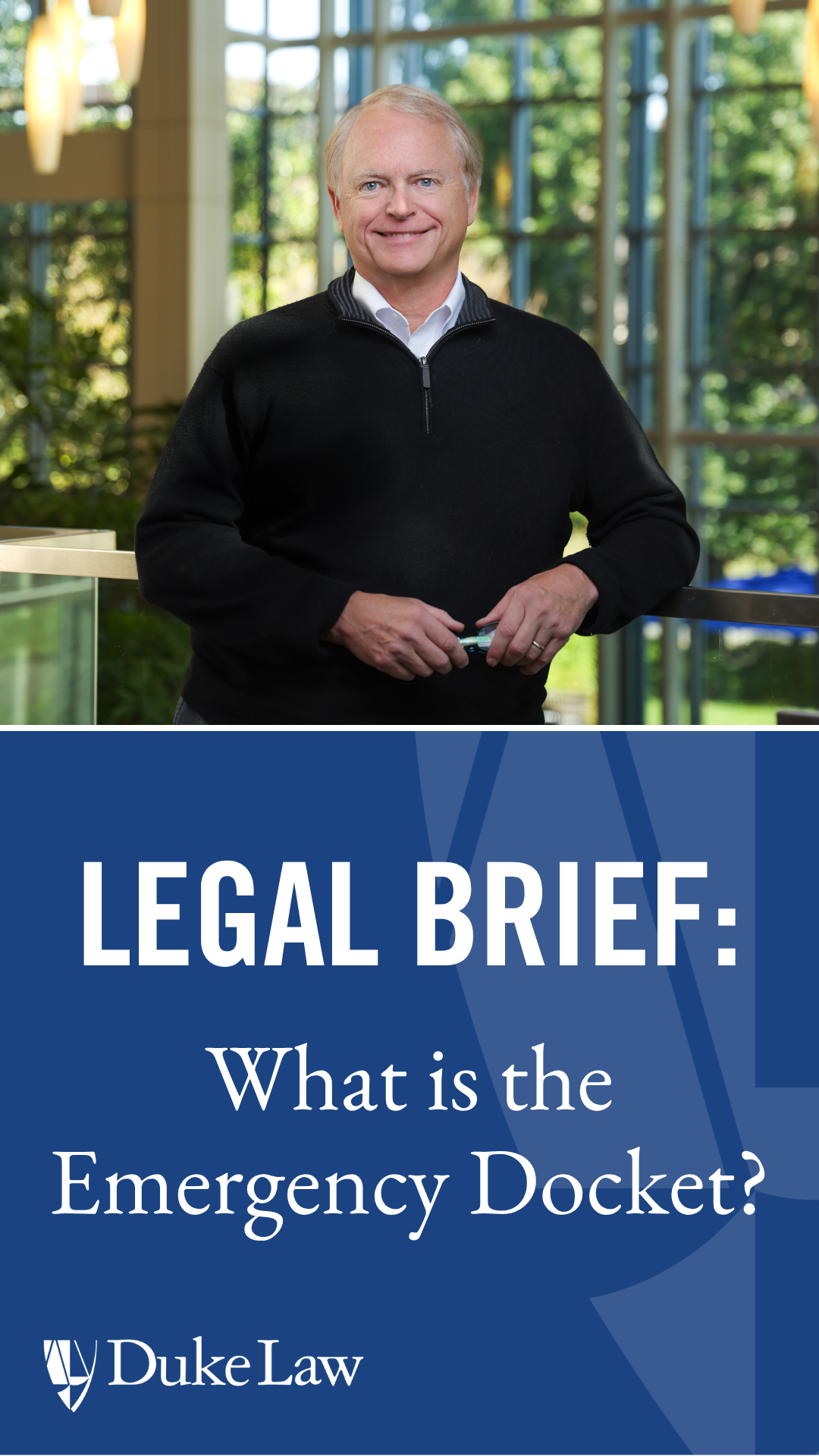

Clinical Professor of Law Jeff Ward explains how Unauthorized Practice of Law rules, originally designed to protect the public from unqualified legal advice, can also limit access to justice.

Professor Stuart Benjamin explains how the federal government manages the airwaves that make wireless communication possible and what makes the FCC’s power so unique.

Professor Tom Metzloff walks through how parties petition the Court for review and what justices may consider when deciding whether to grant cert.

Professor Sarah Ludington explains how the First Amendment applies when government actors delete comments or block users.
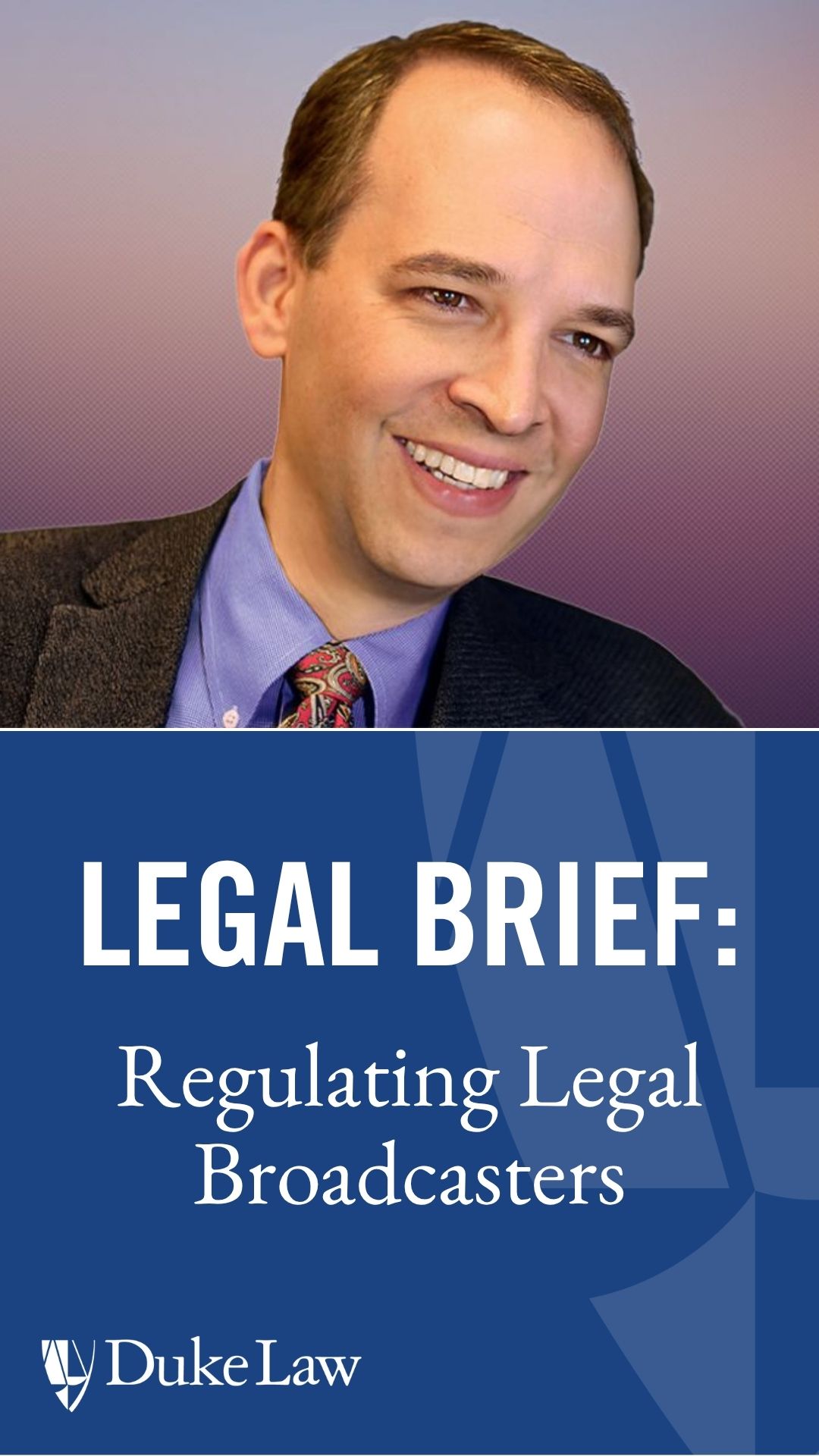
Professor Stuart Benjamin explains two landmark Supreme Court cases that define the limits the First Amendment places on the FCC.
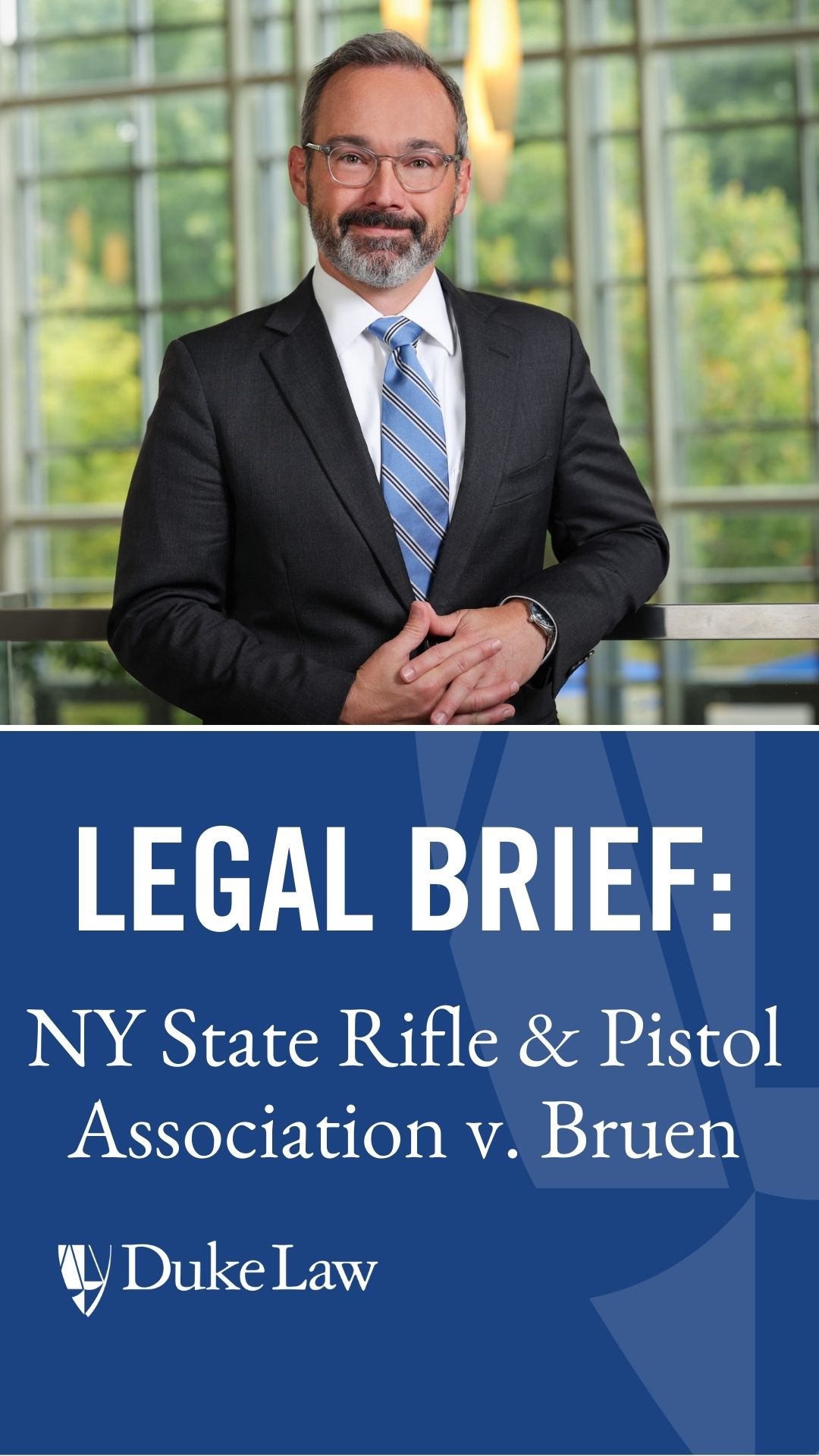
Professor Joseph Blocher breaks down the Supreme Court’s 2022 decision in New York State Rifle & Pistol Association v. Bruen and explains how it has reshaped the test for evaluating gun regulations.

Professor Stuart Benjamin explains the FCC’s standard for broadcast falsification.

Professor Sarah Ludington breaks down the public forum doctrine and how it applies to government-run social media accounts.

Professor Joseph Blocher explains how District of Columbia v. Heller reshaped Second Amendment law and breaks down the shift from a militia-based interpretation to an individual framework.

Professor Brandon Garrett traces the centuries-old history of habeas corpus and explains how it continues to protect individual rights today.
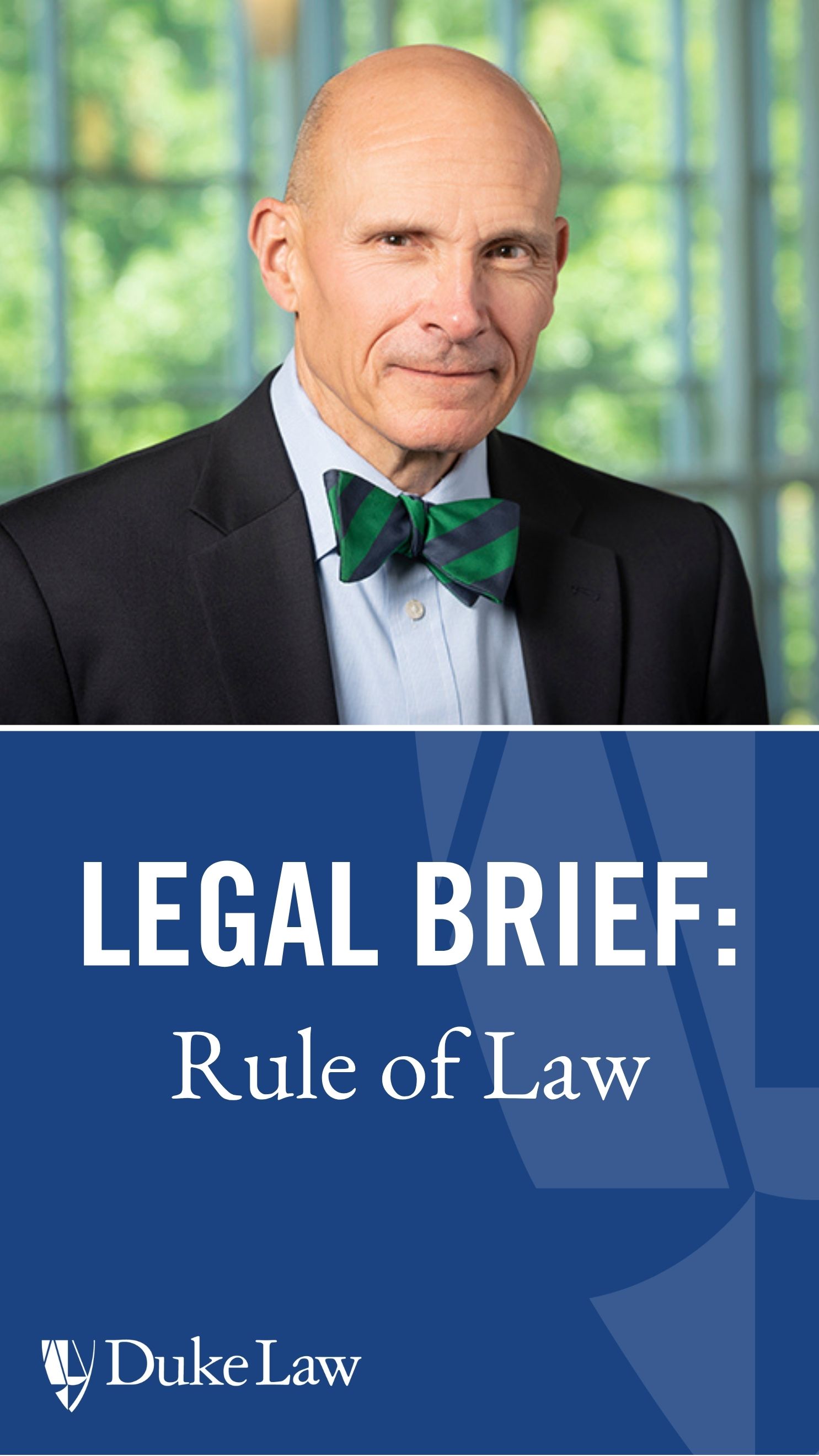
Judge Paul Grimm, Director of the Bolch Judicial Institute, defines the concept of rule of law.
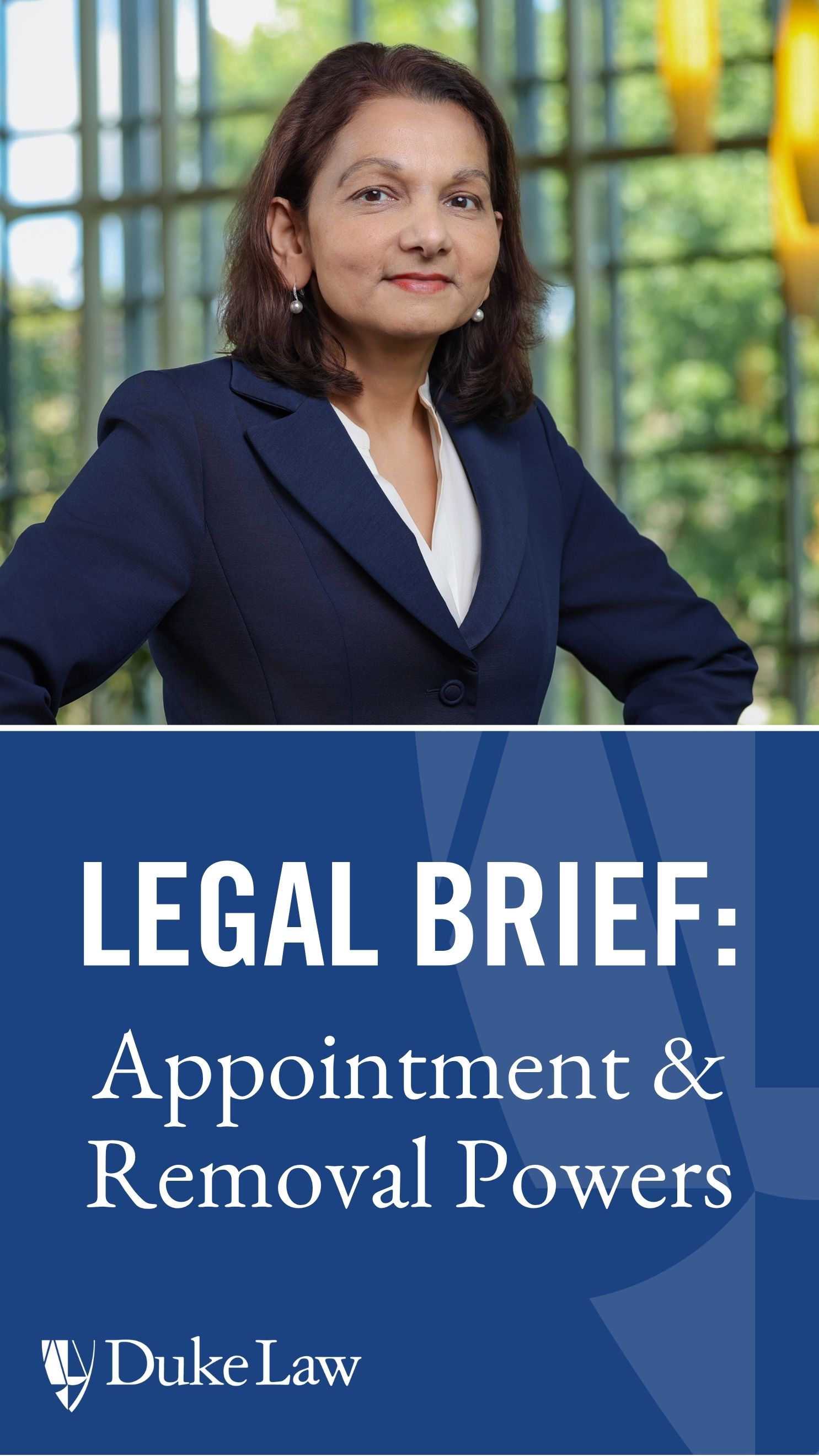
Professor Arti Rai breaks down the rules that govern how federal employees are appointed and removed.

Professor Tim Meyer explains the statues surrounding a president imposing tariffs.
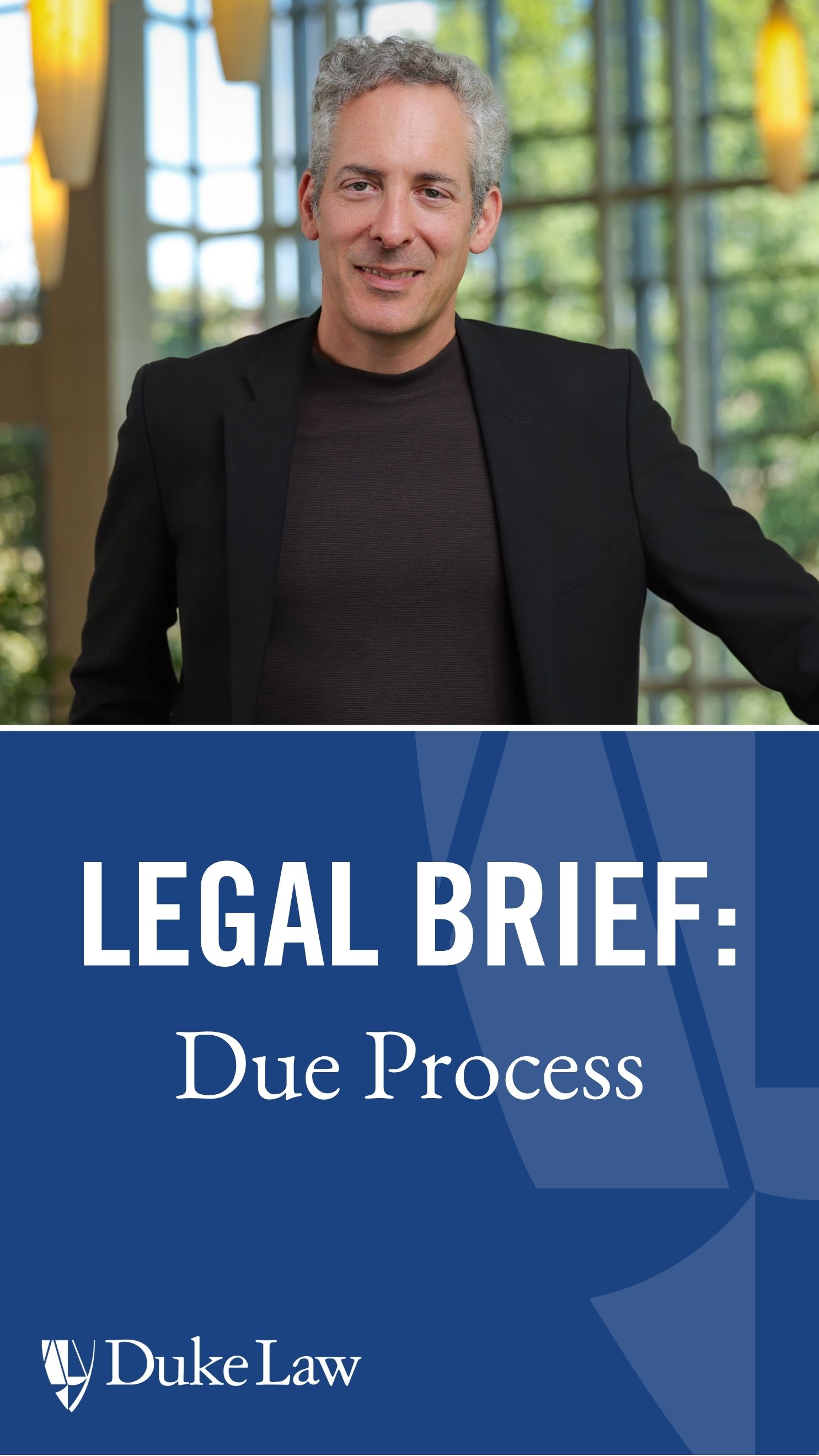
Professor Brandon Garrett explains how the Constitution protects due process and why it’s fundamental to a fair justice system.
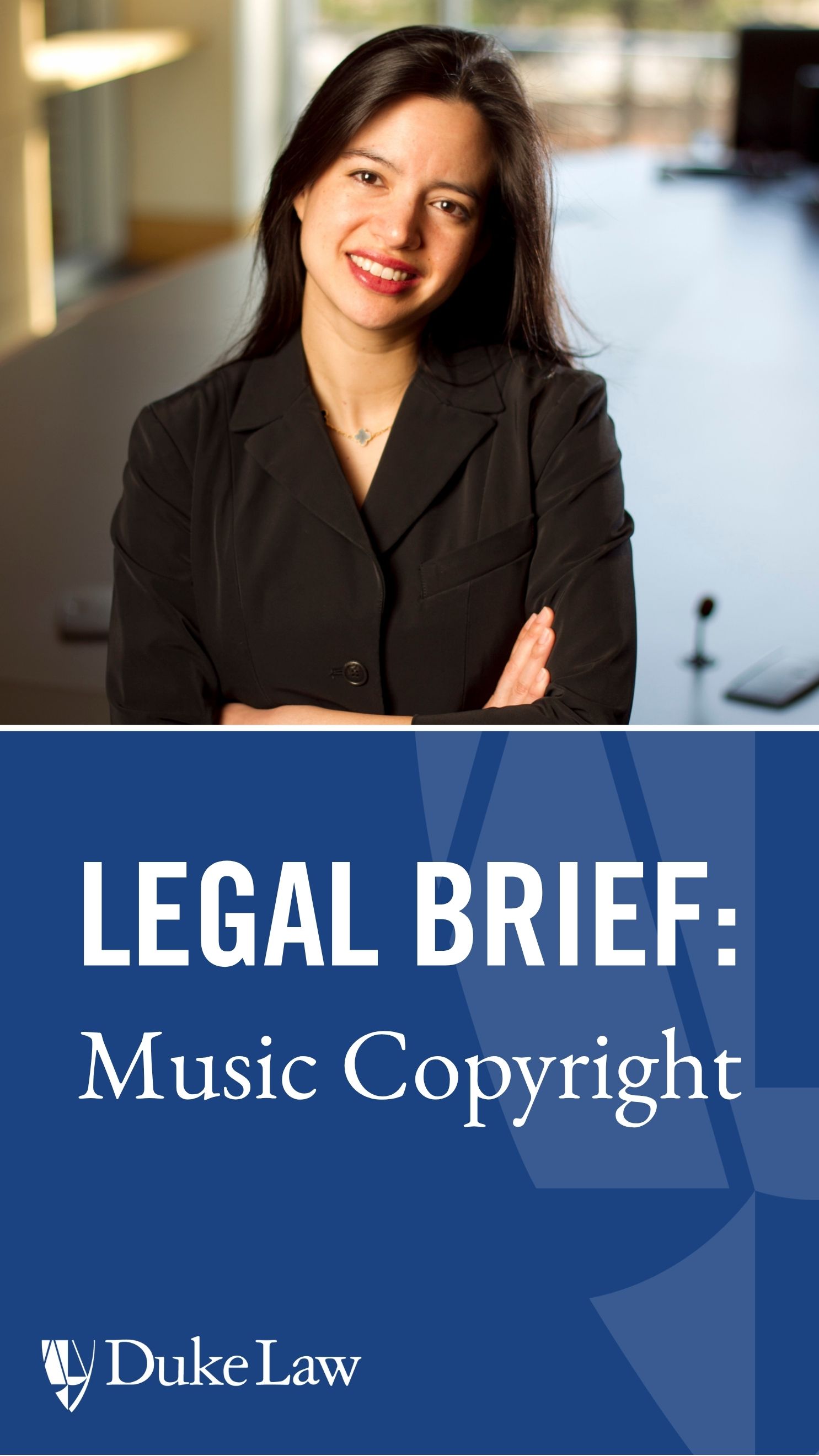
Professor Jennifer Jenkins breaks down the challenges of applying copyright law to music, from the limits of musical vocabulary to the fine line between inspiration and infringement.

Judge Paul Grimm explains how the Constitution separates powers among the three branches of government and why that separation is essential to maintaining a functional democracy.

Professor Rachel Brewster breaks down the FCPA, its impact on global business, and what happens when enforcement is put on pause
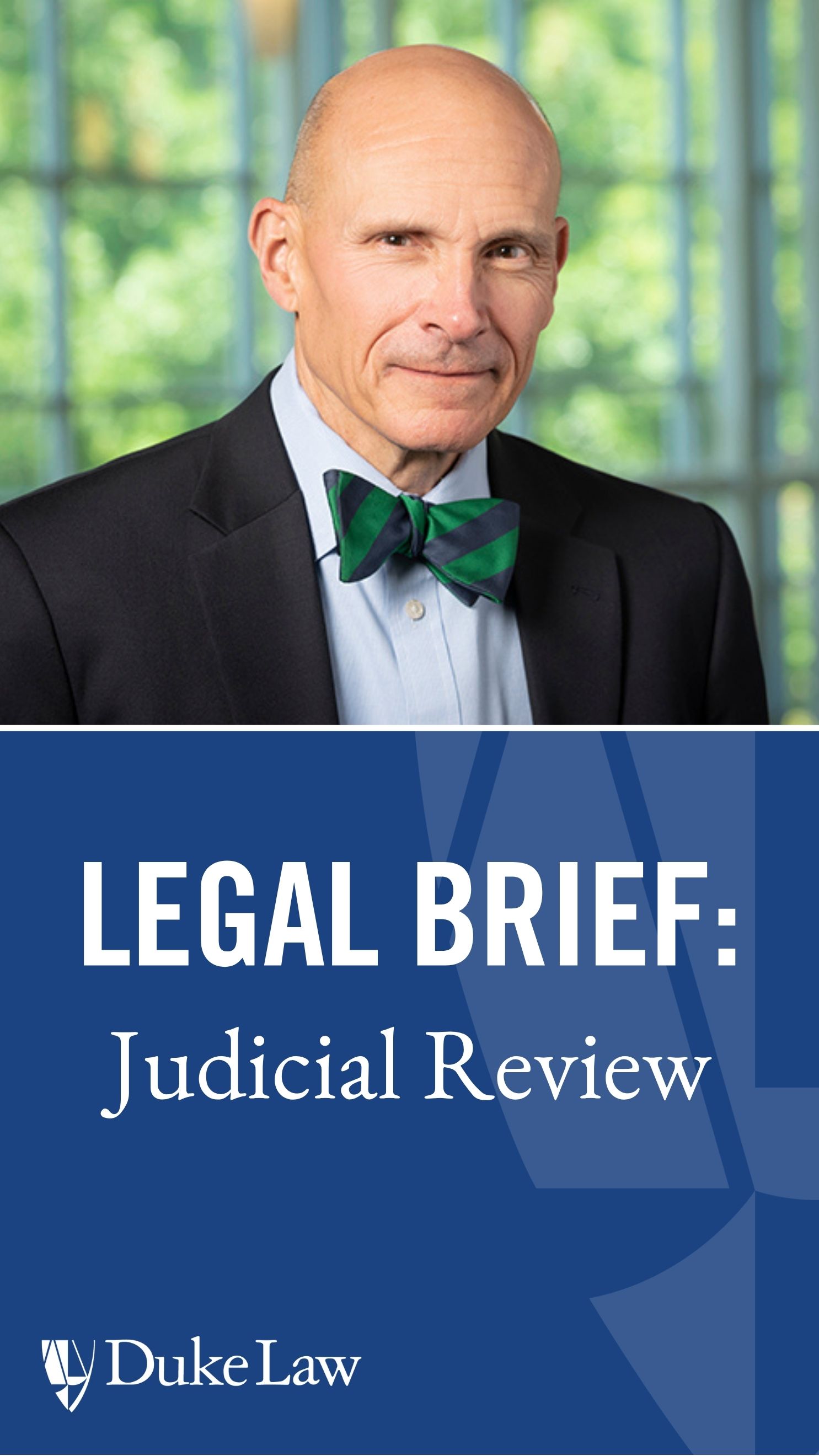
Judge Paul Grimm, Director of the Bolch Judicial Institute, explains judicial review.

Professor Tim Meyer breaks down the Major Questions Doctrine and how it might shape future legal challenges to executive power.

Professor Chris Buccafusco explains why courts are divided on whether an artist’s style can be protected and how the emergence of generative AI is raising new questions.

Judge Paul Grimm, Director of the Bolch Judicial Institute, explains how the Constitution protects judicial independence and why that protection is essential to the rule of law.

Professor Tim Meyer breaks down the International Emergency Economic Powers Act (IEEPA) and how it can be used to impose tariffs.
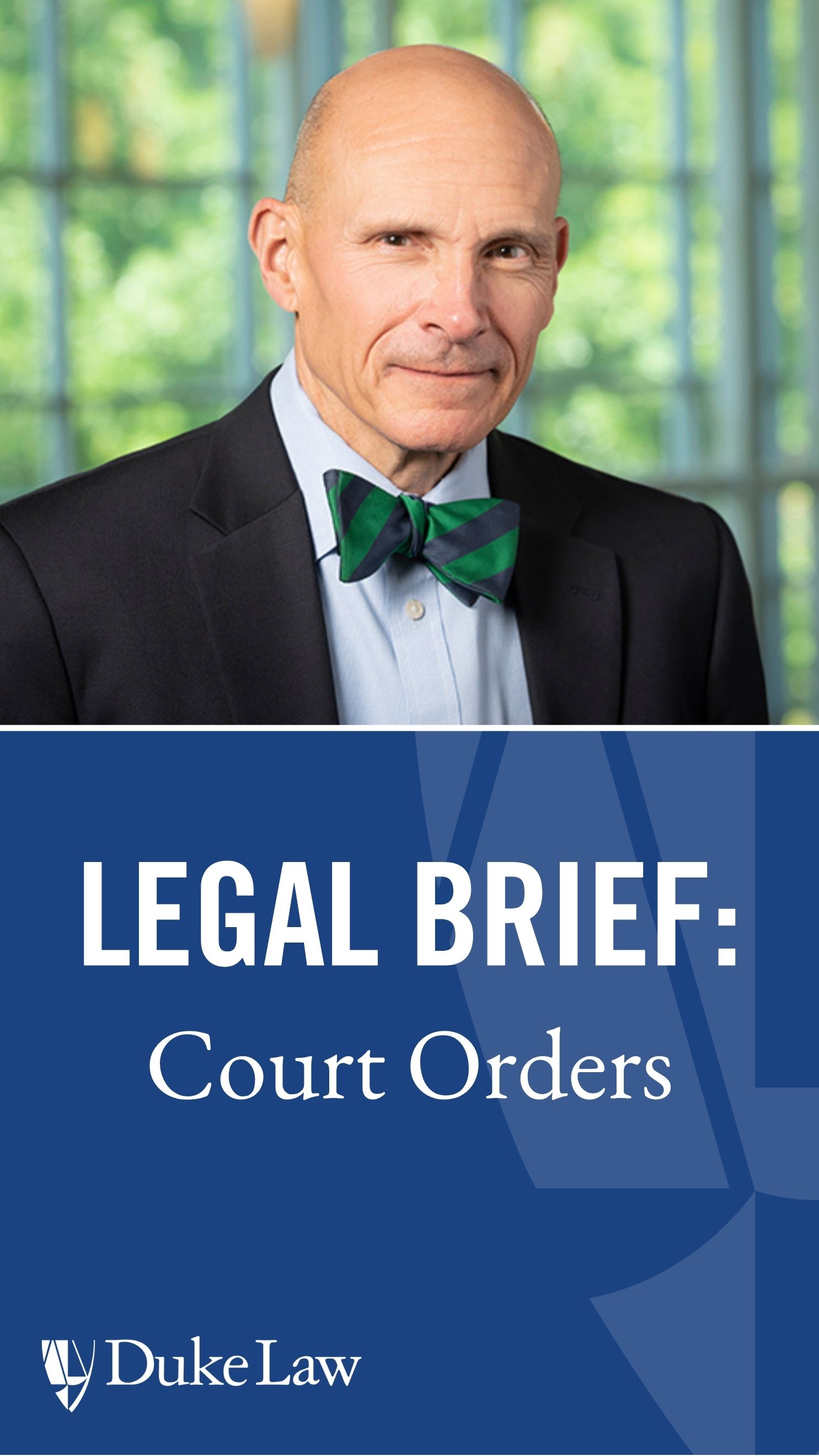
Judge Paul Grimm, Director of the Bolch Judicial Institute, explains how the enforcement of court orders works.