International Human Rights Clinic launches joint briefing paper on trafficking in persons and the rights of persons with disabilities, in partnership with United Nations Special Procedures
The briefing paper, which launched on June 12, was co-authored by the UN Special Rapporteur on the rights of persons with disabilities Heba Hagrass and the UN Special Rapporteur on trafficking in persons, especially women and children, Siobhán Mullally
The Duke Law International Human Rights Clinic has published a new briefing paper – Trafficking in Persons and the Rights of Persons with Disabilities – examining the links between trafficking in persons and the rights and experiences of persons with disabilities.
Persons with disabilities disproportionately experience trafficking in persons, and trafficking may create new or exacerbate existing impairments. Despite this, and despite robust requirements under international law concerning the trafficking-disability nexus, the links between trafficking and disability have been significantly under-addressed.
In seeking to fill this gap, the Clinic carried out primary and desk research, including consultations with a wide range of experts and stakeholders. The briefing paper reviews the findings of that research and presents a series of recommendations for governments, the United Nations, and civil society organizations operating in this space.
The briefing paper and its recommendations were launched at United Nations Headquarters in New York City on June 12, at the Conference of States Parties to the Convention on the Rights of Persons with Disabilities, at which Clinical Professor of Law (Teaching) and Supervising Attorney Aya Fujimura-Fanselow presented. The video of that event can be accessed here.
Click here to read the briefing paper; its executive summary can be found here.
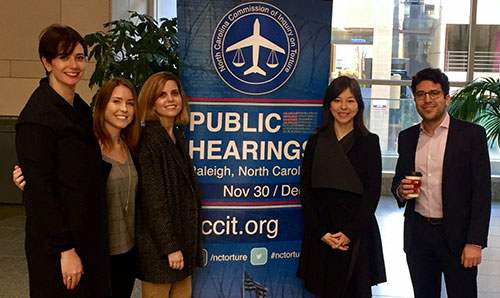
Clinic students support work of novel truth commission in N.C.
Students conducted extensive research and analysis, data visualization, and reporting in support of the North Carolina Commission of Inquiry on Torture hearings.

Tightening the Purse Strings: What Countering Terrorism Financing Costs Gender Equality and Security
The report by the International Human Rights Clinic and Women Peacemakers Program analyzes how countering terrorism financing rules impact women’s rights organizing, women’s rights organizations, and gender equality.

Helfer elected as U.S. representative to the United Nations Human Rights Committee
An expert in international law and human rights, Helfer will join an 18-member body that protects civil and political liberties and fundamental freedoms around the globe.