Bringing human rights home
Professor Laurence Helfer involves Duke Law students in the real-world monitoring of international human rights through his service on the UN Human Rights Committee
Professor Laurence R. Helfer’s role as an independent expert on the UN Human Rights Committee has sparked new learning opportunities for students at Duke Law.
During his four-year term on the Committee, which monitors implementation of the International Covenant on Civil and Political Rights, Helfer has exposed students to its work through real world cases and experiential in-role exercises.
Six to eight students each year enroll in a research tutorial to assist Helfer with one of the Committee’s primary responsibilities — reviewing reports by the 174 states parties to the treaty on how they protect the civil and political rights and the compliance challenges they face. Students — whose work is governed by a confidentiality agreement — review the materials submitted by countries and civil society groups, conduct independent research, and help draft detailed questions that Helfer poses during a two-day dialogue with country delegations in Geneva, Switzerland. Students have investigated a wide range of countries and topics, including police killings in Trinidad and Tobago, the rights of religious minorities in India, LGBT rights in Indonesia, and judicial independence in Zimbabwe.
For students in his International Law course, Helfer designed a multi-stage, in-role negotiation exercise that focuses on recent human rights problems in Peru, including excessive use of force by the police, restrictions on freedom of assembly, and public emergency declarations. After reviewing excerpts of materials relating to these concerns, students assume the role of one of three key actors — government officials, NGO representatives, and members of the Human Rights Committee — engage in a mock dialogue, and submit an assessment of their exchanges. The students’ concluding observations and recommendations, Helfer said, matched remarkably well with those actually issued by the Committee.
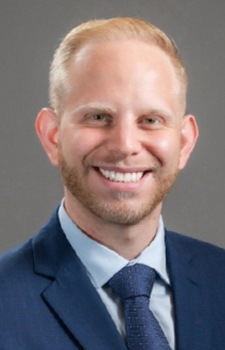
“The opportunity to apply international law principles through the simulation and then reflect on the experience with a member of the actual Committee was incredibly enriching,” said Abe Waserstein, JD/LLM ’27.
Students in the research tutorial also assist Helfer with drafting separate concurring or dissenting opinions in cases decided by the Committee in response to individual complaints alleging rights violations. Assessing these complaints has provided a unique opportunity to engage in time-sensitive legal research with direct implications for individuals, Waserstein said.
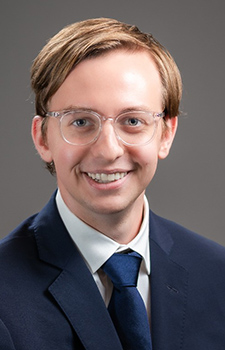
The tutorial's year-long format enables students to situate their country-specific research in the broader context of the Committee’s work and its relationship to other UN and regional human rights systems.
“The tutorial pushed me to think institutionally rather than only doctrinally, and to evaluate our work in terms of actual efficacy,” said David Garrett, JD/LLM '27, who plans to pursue a career in international human rights law and who praised the hands-on exposure to human rights practice.
“The experience gave me a clearer sense of how treaty monitoring bodies function and how researchers and NGOs help build the factual record needed to hold states accountable.”
Waserstein has assisted with Helfer's preparation for dialogues with Kazakhstan, Latvia, and Spain on preventing, investigating, and punishing discrimination, hate crimes, and hate speech. He has also conducted comparative legal research on European Court of Human Rights and Committee jurisprudence to support Helfer’s concurring opinion on privacy rights.
“Beyond the formal opportunities that Professor Helfer offers Duke Law students, it’s the informal mentorship that really has left a lasting impression,” Waserstein said.
“Professor Helfer not only is committed to effecting positive change in the world through international human rights law in the present, but he is preparing the next generation of lawyers to continue this work into the future.”